
Quick Facts
- LPGA season purse hit $131M across 33 tournaments – over 40 players crossed $1M in prize money for the first time ever, with Jeeno Thitikul earning a record $7.58M single-season haul
- WTA paid out $249M in prize money in 2025 (13% increase from 2024) – Elena Rybakina won $5.235M at WTA Finals in Riyadh, the largest single-event payout in women's sports history
- Basketball is reshaping women's sports salary ceilings fastest: Unrivaled launched with $220K average salaries (highest of any women's league), NWSL minimum jumped to $48.5K (39% increase since 2023), and Trinity Rodman became the world's highest-paid female soccer player at $2M+/year
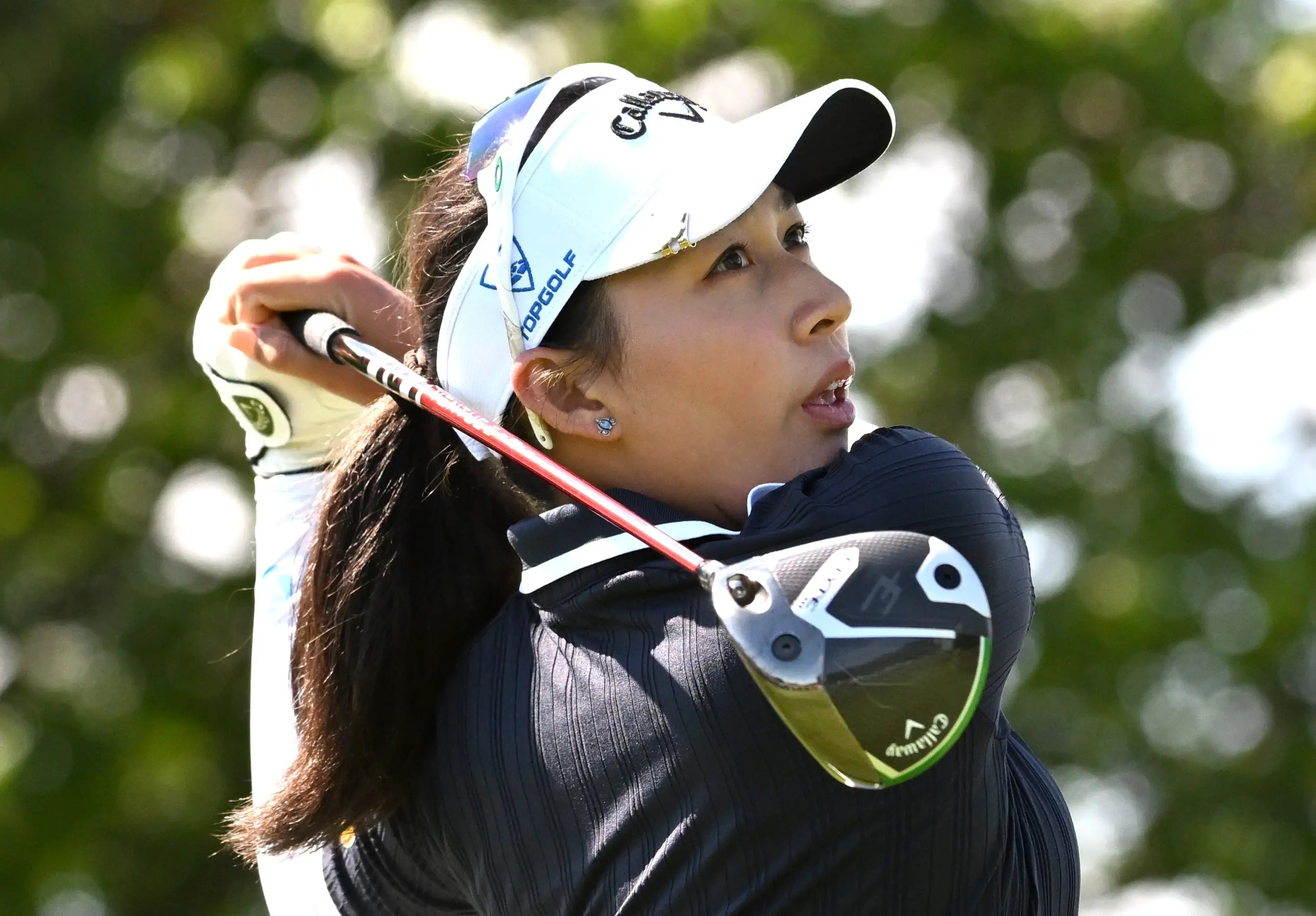 Aug 21, 2025; Mississauga, Ontario, CAN; Jeeno Thitikul plays her tee shot on the 17th hole during first round play at the CPKC Women's Open golf tournament. Mandatory Credit: Dan Hamilton-Imagn Images
If 2024 was the year women’s sports went mainstream, 2025 is the year the money started to catch up. Prize purses surged. Salary floors jumped. Entire leagues were built — or rebuilt — around a simple truth: women’s sports are no longer a “good story,” they are a business engine.
This year, more women cleared six- and seven-figure seasons than at any point in history across golf, tennis, basketball, volleyball, soccer, and even the emerging leagues that once felt experimental. As brands, media partners, and investors finally recognize what fans have long understood, that everyone watches women’s sports, one question naturally rises to the top:
Which women’s sports paid the most in 2025?
Below, we break down the four sports where women earned the most this year, and the other leagues making significant money moves that could reshape this list in the very near future.
Golf — The sport where the biggest money jumps are happening
Golf has never looked more financially powerful for women than it did in 2025.
The LPGA’s season purse surged to $131 million across 33 tournaments, and for the first time in history, more than 40 players crossed the one-million-dollar threshold in prize money. Jeeno Thitikul led the tour with an extraordinary $7.58 million season — the largest single-year haul in LPGA history — followed by Minjee Lee, Miyu Yamashita, and Rio Takeda with multi-million dollar seasons of their own.
That growth has trickled far beyond the top of the leaderboard. One hundred and six players earned over $200,000 this season; a meaningful milestone in a sport where income is entirely performance-based.
Just as important is what’s happening behind the prize money. For the first time, the LPGA is providing fully subsidized health insurance for players. For decades, the assumption in men’s golf has been that prize earnings support everything; in women’s golf, the financial margins were often thin enough that benefits needed to be mentioned explicitly. This year, the LPGA erased that gap.
Between rapidly rising prize money and meaningful structural support, golf is one of the highest-paying women’s sports with the steepest upward trajectory. And with the launch of the WTGL bringing LPGA stars into a modern, media-ready league in 2026, that growth will extend to even more athletes and new fans.
Tennis — Still the most lucrative global stage for women
Women’s tennis continues to set the standard for what equitable prize money can look like, and 2025 only widened that lead.
The WTA forecasts $249 million in prize money paid out this year across the calendar — a 13% jump from 2024 — and players at the sport's pinnacle are earning figures historically unheard of outside Olympic years. Aryna Sabalenka led the season with just over $15 million in prize money, breaking the record set by Serena Williams nearly a decade ago.
Then came a moment that instantly entered sports business lore: Elena Rybakina winning $5.235 million at the WTA Finals in Riyadh — the largest single-event payout in women’s sports history.
And prize money is only half the story in tennis. Because the WTA draws a global audience, endorsements follow. Coco Gauff topped all female athletes last year at $30.4 million in total earnings, and Swiatek and Sabalenka were not far behind. Tennis remains the rare women’s sport where pay, popularity, and commercial appetite rise in sync, and where the path to a multimillion-dollar career is both clear and proven.
Basketball — A shifting ecosystem rewriting the salary ceiling
No women’s sport is experiencing more upheaval, or more possibility, than basketball.
For decades, the WNBA’s economic structure kept earning potential well below what players commanded globally, pushing athletes to split their year between the WNBA season and overseas contracts. In 2025, for the first time, players don’t need to leave the U.S. to maximize their income.
The new league Unrivaled, co-founded by Breanna Stewart and Napheesa Collier, launched with the highest average salary of any women’s sports league — roughly $220,000 for an eight-week schedule. Athletes Unlimited continues to offer meaningful income over short-season play, another $30,000–$40,000 on top of whatever players make in the WNBA or with brands.
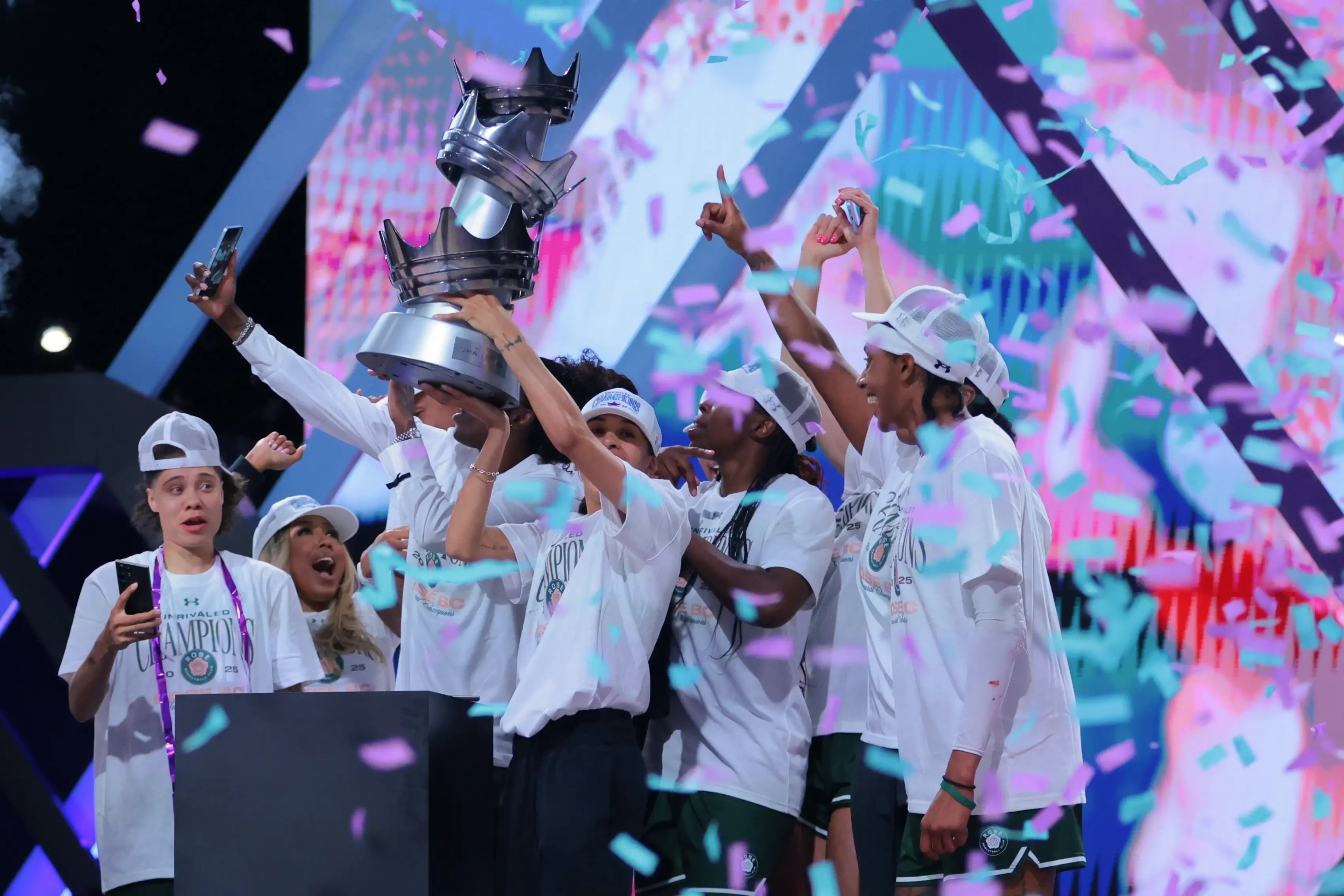 Mar 17, 2025; Miami, FL, USA; Rose BC head coach Nola Henry lifts the trophy after winning the Unrivaled Championship game against the Vinyl BC at Wayfair Arena. Credit: Sam Navarro-Imagn Images
Meanwhile, Caitlin Clark reshaped the endorsement economic model almost overnight. Her $16 million in sponsorship earnings would have been unheard of even five years ago for a rookie, while Sabrina Ionescu and Angel Reese have quickly followed her into seven-figure branding territory.
And hovering over all of it is the 2026 WNBA CBA negotiation, which includes proposals that would triple the league’s average salary and create the first million-dollar base salary in U.S. women’s team sports history.
Basketball may still trail tennis and golf in raw compensation for the very top earners, but in terms of velocity, no sport is moving faster.
Soccer — Holding steady as a top earner, but under pressure from below
The NWSL continues to cement itself as a career-sustaining league, anchored by rising salary minimums and a salary cap that more than doubled in the past two seasons.
The minimum salary jumped to $48,500 in 2025 — up 39 percent since 2023 — and the team salary cap climbed again to $3.3 million, with potential to reach $3.5 million with revenue sharing. Salaries are stabilizing, roster spots are expanding, and teams are investing aggressively in travel standards, facilities, and marketing.
Top players like Sophia Smith now clear half a million in salary and tack on more than a million in endorsements. Meanwhile, the league’s attendance and viewership are booming — ESPN reported a 72% jump on its platforms.
.png?width=1456&height=180&name=Blog%20Banners%20(6).png)
What keeps soccer in fourth place for now is its income ceiling: Most players earn mid-five figures, not mid-six. However, that ceiling is already starting to crack: in January 2026, Trinity Rodman became the highest-paid player in NWSL history and the world’s highest-paid female soccer player after signing a three-year extension with the Washington Spirit worth more than $2 million per year including bonuses.
In addition, Gainbridge Super League ambitions, expansion markets, and media rights negotiations suggest that soccer could leap into third place within two to three years — especially if the WNBA’s CBA talks stall.
Close behind: Women’s Hockey, which refuses to wait its turn
The PWHL sits one rung outside the top four only because salaries haven’t fully caught up with fan demand yet.
In only its second season, the league crossed the one-million fan mark, an astonishing adoption curve by any professional standard. Clubs now operate under a $1.3 million cap, with minimum salaries of $35,000 and at least six players per roster earning $80,000 or more. Emily Clark’s extension, verified by multiple outlets as a record setter, signals that elite players are beginning to command meaningful pay.
If attendance, media distribution, and energy remain where they are, or continue to grow, hockey becomes a top-four contender in short order.
Beyond the Top Four: The Leagues Making the Biggest Money Moves
The next four sports may not yet offer top-tier earnings across their rosters, but they are writing the clearest blueprint for where women’s sports investment is headed.
Volleyball
Professional volleyball is building a complete U.S.-based structure; something that hasn’t existed before at scale. LOVB has raised more than $160 million and began its full professional season with player salaries starting around $60,000 for a half-year season, while PVF teams are expanding, raising payrolls, and preparing to unify under Major League Volleyball in 2026.
Volleyball is growing and constructing an infrastructure large enough to compete with the established leagues.
Pickleball
Pickleball is the earnings outlier no one predicted a few years ago. Across the PPA and MLP systems, dozens of pros are now averaging six-figure incomes — many of them surpassing the highest WNBA base salary — while franchises are selling for valuations once associated only with men’s minor league baseball.
If growth holds, pickleball could break into the top four rankings purely on earning potential within the decade.
Softball
Softball’s transformation may be the quietest but most strategically important. With MLB investing eight figures into AUSL, athletes earning more than $40,000 for a short-season, and the top American pros supplementing that income abroad, softball is becoming a legitimate professional pathway, not merely an extension of college fame.

About Parity, a Group 1001 Company
Parity is the leading platform for professional women athlete partnerships. With a mission to close the gender income gap in sports and beyond, Parity connects brands with a diverse network of more than 1,400 women athletes from 85 sports. Through sponsorship activations, content collaborations, and strategic advisory, Parity helps brands authentically engage the most trusted voices in sports today. For more information, visit www.paritynow.co, or follow us on Instagram and LinkedIn.



.webp?width=600&name=USATSI_28449504%20(1).webp)