Quick Facts:
- Zero women made the list of the world's 100 highest-paid athletes in 2025 – even top earner Coco Gauff ($31M) didn't come close to cracking the men's list
- Nearly 78% of women athletes earn $50K or less from their sport, with 58% earning $25K or less – roughly half earn no net income after factoring in training/travel costs (41% spend $10K+ annually)
- 93% of women athletes experience financial stress and 64% have considered retiring due to economic pressures, while 74% work outside jobs (1-in-4 hold full-time year-round jobs on top of 22+ hours/week of training)
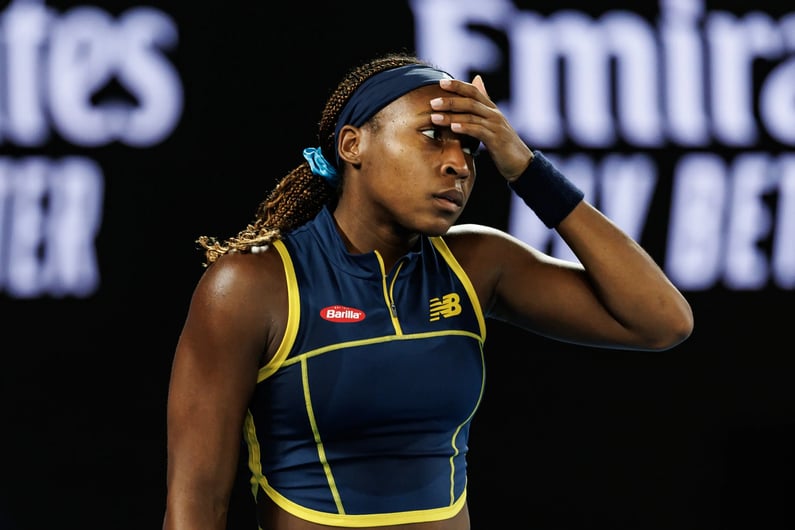
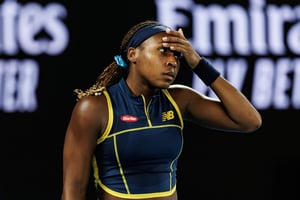
Jan 25, 2024; Melbourne, Victoria, Australia; Coco Gauff of the United States looks frustrated during her match against Aryna Sabalenka of Belarus in the semi-final of the women s singles at the Australian Open. Credit: Mike Frey-Imagn Images
A look inside the high cost that elite women athletes pay to compete.
In 2025, there were once again no women on the list of the world’s 100 highest-paid athletes. Not a single one.
Not even Coco Gauff – who topped the list of highest-paid women athletes in 2025 with $31 million in total earnings – came close to cracking the earnings of the highest-compensated men in sports. It’s a familiar and deeply troubling pattern. Women in sports are consistently undervalued and underpaid for their labor, so much so that even the very best women athletes in the world earn only a fraction of what their male counterparts make.
Women’s basketball offers a striking example of this disconnect. Today, women’s basketball is the most-watched women’s sport in the United States, and the WNBA ranks among the top five most popular professional sports leagues nationwide, behind only the NFL, MLB, NBA, and NHL. Despite this surge in popularity, visibility, and cultural relevance, in professional basketball, women make just 6 cents for every dollar that professional men’s players make.
What makes this disparity even more alarming is that women’s basketball is often viewed as a “gold standard” for professionalized women’s sports. In the U.S., it is a leader in fan engagement, media coverage, sponsorship interest, and professional infrastructure. Yet, even in the strongest of women’s sports ecosystems, compensation remains profoundly unequal. Across nearly every other women’s sport, conditions are much worse.
For most women athletes, earning a living wage from sport is not just difficult; it’s nearly impossible.
In December 2024, Parity conducted research examining the economic realities faced by women athletes, and the findings were stark. Nearly 78% of respondents reported earning $50,000 or less from their sport in 2023, with 58% earning $25,000 or less. At the same time, 41% reported spending more than $10,000 annually on training and travel. When those costs are factored in, roughly half of the athletes surveyed reported earning no net income from their sport at all.
To put it simply: many women athletes are paying huge prices to compete.
To understand the severity of this gap, consider broader economic benchmarks. A recent study found that a single adult with no children in the United States needs an average annual income of $102,648 to live comfortably. By contrast, the federal poverty threshold for a single adult is $15,650. For many women athletes, their earnings place them far closer to the poverty line than to any reasonable standard of financial stability. For some, relying solely on their sport for income would put them below the poverty threshold altogether.
As a result, most women athletes are forced to juggle multiple jobs just to stay afloat. Parity found that 74% of women athletes work outside of sports to make ends meet, with 1-in-4 holding full-time, year-round jobs in addition to their athletic commitments. On average, these athletes dedicate more than 22 hours per week to training on top of their primary paid work.
For these athletes, the cost isn’t just financial; it’s emotional and physical. 93% percent of women athletes surveyed reported experiencing financial stress, and 64% said they have considered retiring from their sport due to economic pressures. Only 7% of women athletes surveyed by Parity said they feel financially stable.
Another unfortunate reality is that these challenges are not unique to the United States. Across the globe, women athletes face similar financial hardships. A recent survey of elite women athletes in Australia found that 39% earn zero income from their sports, while 36% earn between $5,000 and $20,000 annually. That means that 75% of elite women athletes surveyed earned less than $20,000 per year from competition.
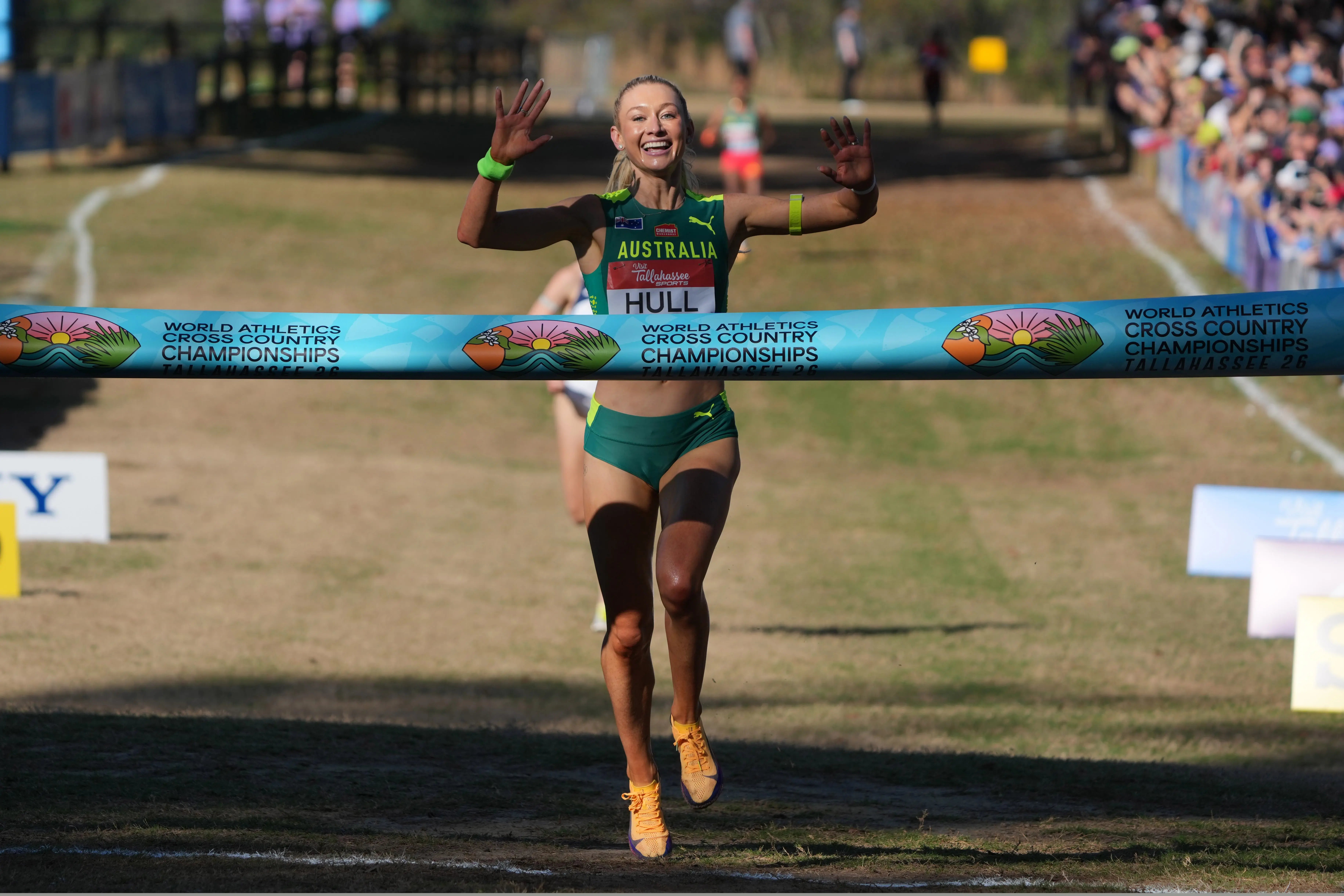 Jan 10, 2026; Tallahassee, FL, USA; Jessica Hull runs the anchor leg on the victorious Australia mixed relay that won in 22:23 during the World Athletics Cross Country Championships Tallahassee 26 at Apalachee Regional Park. Credit: Kirby Lee-Imagn Images
There is a clear and consistent pattern around elite women athletes – those performing at the highest levels of their sport – living in or near poverty in order to compete in their respective sports.
While there has been meaningful progress to celebrate related to the fight for pay equity in sports – such as a record 15 women athletes earning more than $10 million in 2025 – these wins remain the exception, not the rule. With the vast majority of women athletes still shouldering huge costs to play their sports, the playing field is still far from equitable, let alone equal.
About Caroline Fitzgerald
Caroline Fitzgerald (she/her) is a contributing writer for Parity and the CEO & Founder of GOALS - a women's sports marketing consultancy & media platform. Caroline launched GOALS in 2020 after recognizing that there was an opportunity to help brands, networks and fans see the social and economic value that can come from investing in women's sports. GOALS also produces the leading women's sports business podcast - 🎙️The Business Case for Women's Sports, which is presented by Ally. For more information on GOALS, visit https://goals-sports.com or follow on Instagram, LinkedIn, Facebook, X (formerly Twitter) and Threads.
About Parity, a Group 1001 Company
Parity is the leading platform for professional women athlete partnerships. With a mission to close the gender income gap in sports and beyond, Parity connects brands with a diverse network of more than 1,400 women athletes from 85 sports. Through sponsorship activations, content collaborations, and strategic advisory, Parity helps brands authentically engage the most trusted voices in sports today. For more information, visit www.paritynow.co, or follow us on Instagram and LinkedIn.